X

Customize

Print Options

More options coming soon:
Create, save, and share your own pages—using news, video, and campaign information from any college, unit, or priority.

College of Agriculture & Life Sciences

Celebrating the Class of 2013!

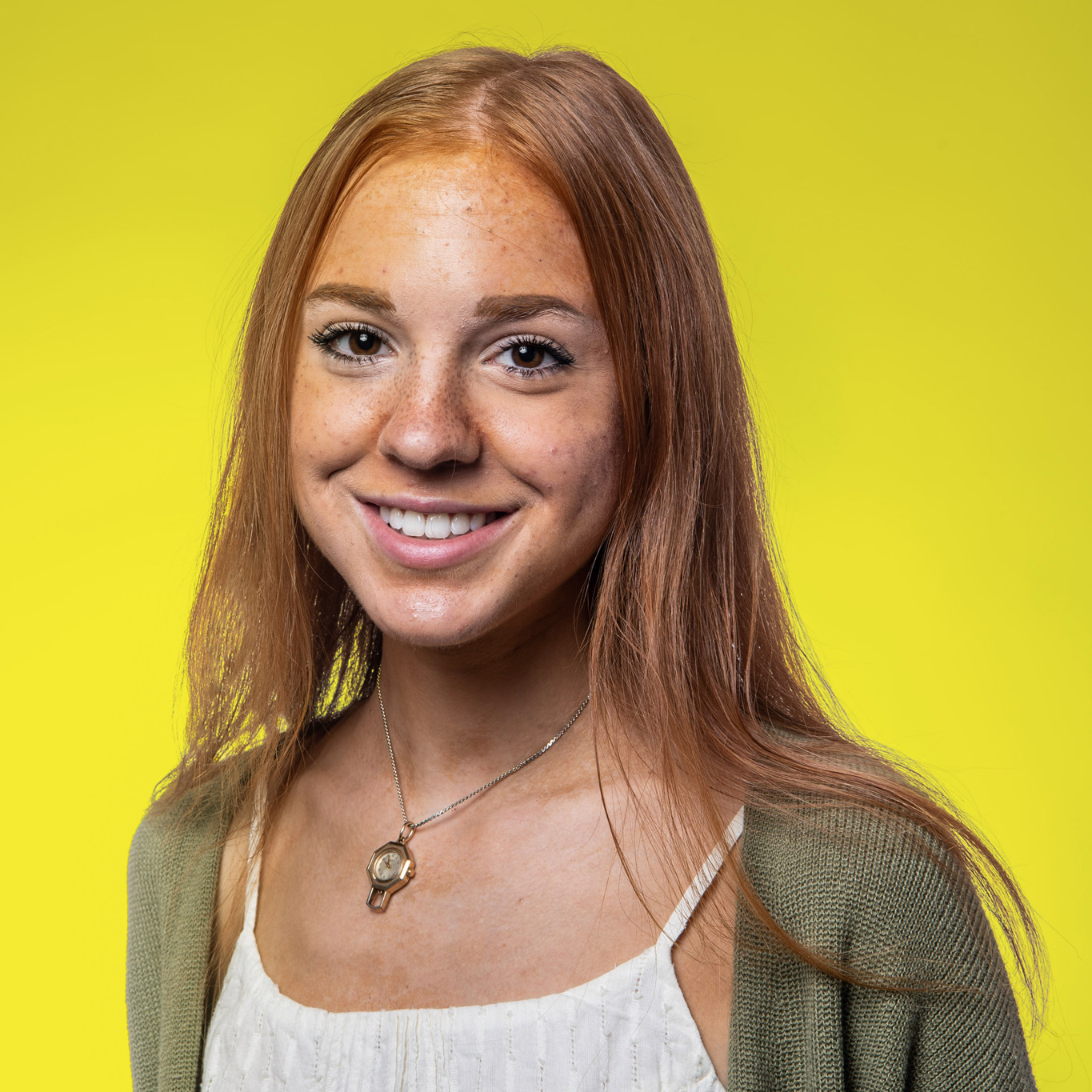
Sharmila Jai Kumar ’13 has worn many hats on her journey to graduation—one of student, leader, volunteer, colleague, and friend. For Jai Kumar, receiving a Cornell degree—a BS in biological sciences with a concentration in nutritional sciences, and a minor in applied economics and management for the life sciences—is one of her greatest accomplishments. While on The Hill, Sharmila was a resident assistant at the Hans Bethe House, spent time in rural India studying diet and nutrition strategies for low-income patients suffering from diabetes, and was a curriculum intern for Weill Cornell Medical College. Find out more about Sharmila and what her hopes are for the future.

previous entries

Our Sustainable Vision

Solutions to today’s global challenges require insight into the dynamics of coupled human and natural systems. Many opportunities will be found at the intersection of the four interdependent and interacting areas of focus that inform and support CALS’ mission and shape the college’s commitment to advancing the land grant mission.

Informed by discoveries from the college’s broad spectrum of expertise, CALS’ research, educational, and extension programs:

  • Advance knowledge of the unity and diversity of life;
  • Impart to our students a world-class education and passion for life-long learning and discovery;
  • Promote wise stewardship of the environment and natural resources, and create economical, sustainable energy strategies;

Continue reading...

Food & Energy Systems

Cornell University, a federal land grant university, literally "grew up on the farm." Agriculture was the catalyst for the university's founding in 1865 by Ezra Cornell and Andrew Dickson White and it plays an equally important role today, as CALS scientists search for ways to feed an ever-expanding population and fuel an on-the-go planet. CALS has a tradition of meeting society's needs. Through world-recognized teaching research, and extension programs CALS has made a local and global impact on the way the Earth's inhabitants live, learn and thrive. 

Environmental Sciences

From classroom to laboratory, field, forest, and watershed—even to the halls of Congress itself—CALS’ scientists enhance our understanding of issues regarding air, water, soil, and climate change as they discover “greener” approaches to remediation, and enhance the stewardship and sustainability of the world’s scarce natural resources.

Through academic research, course work, field work, and internships, CALS students graduate with a breadth and depth of environmental knowledge and with experiences that emphasize problem-solving and outreach.

Through programs offered in agricultural and atmospheric sciences, ecology and evolutionary biology, environmental engineering, natural resources, and environmental systems, CALS encompasses a diversity of programs that encourage students to pursue and connect their spectrum of interests.

Economic & Community Vitality

Applied social sciences became a CALS priority more than a century ago when Liberty Hyde Bailey, the first dean of the college, committed college resources to strengthening agricultural economies and rural communities in New York. Today, CALS scientists pursue scholarship that addresses how people inform, interact, learn and do business, fostering economic vitality and facilitating individual and community health and well-being. This includes informing decision-makers and public officials, increasing awareness of the roles of technology and science in society, influencing public policy and economic development, and evaluating technologies for business creation and economic development.

A distinguishing characteristic of CALS is that we provide our students with an education that combines theory and practical application. Through courses of study in business leadership, efficient use of resources, new product and service creation, agricultural and mathematics education, communication technologies, media campaigns, environmental management, community development, working with a developing nation, community or civic design, CALS is committed to enhancing economic and community vitality.

Life Sciences

CALS is distinguished in embracing both the discovery of life process and the application of those discoveries to benefit the life of the planet and its people. From genomics to proteomics, our scientists are developing novel approaches to critical problems of the 21st century related to human and animal disease, food and water supply, and the environment by incorporating new tools, new data, and new thinking.

Beyond basic biological research, the college is engaged in applying discoveries in the life sciences and exploring the economic, ethical, legal, and social issues involved in new life sciences technologies.

Campaign Priorities

CALS combines excellence in individual disciplines with some of the most innovative interdisciplinary work in the world. The campaign will enable CALS to fulfill the vision of the college's founders and the land grant mission of creating "Knowledge with a Public Purpose."

To do this, the college will support five priorities:

  • The CALS Annual Fund
  • Faculty Renewal
  • Undergraduate Scholarship
  • Graduate Fellowships
  • Program Support

Annual Fund

Gifts to the CALS Annual Fund are directed by Dean Boor to where the need or priority is greatest. Currently, the Annual Fund directly supports our most valuable resource: our people. For our students and faculty, these contributions help to ensure that they can take full advantage of the incredible intellectual resources at Cornell, as well as to create opportunities in service to our local, national and global communities.

Our undergraduate students benefit from Annual Fund gifts through scholarship assistance or internship support; our newly-hired faculty gain the ability to purchase cutting-edge research equipment or to generate essential research data to secure external funding. Each and every Annual Fund gift contributes to the excellence that you know as “Cornell.”

Faculty Renewal

From emerging 'stars' to distinguished senior faculty at other universities, CALS is attracting faculty dedicated to serving the public good. The College of Agriculture and Life Sciences faces an unprecedented number of faculty retirements over the next five years and is proactively hiring in anticipation to ensure continued excellence in teaching, research, and extension. Faculty Renewal gifts are used to recruit, compensate and recognize excellent faculty and have a significant impact on the college’s ability to recruit, and retain, the best faculty in any given discipline.

Currently, there are 18 searches in progress, including positions in dairy biology and management, population genomics, biodiversity/conservation science, insect immunology, and sociology of food systems.

Undergraduate Scholarships

The College of Agriculture and Life Sciences has opened its doors of higher education to the best and brightest young people for more than 100 years. Scholarship endowment is critical to ensuring that the cost of a CALS education stays within the financial reach of deserving students, without regard to their financial circumstances.  This is why gifts to Undergraduate Scholarships are a top priority for CALS.

Graduate Fellowships

Support for CALS graduate students not only enhances the quality of top programs and research by attracting the most promising students; it also strengthens the college's ability to recruit and retain top faculty, who want to be assured of having the best research assistants and being able to create a legacy of mentoring top young scientists. Gifts to Graduate Fellowships are particularly critical now as traditional sources of funding, such as grants, are on the decline.

Program Support

Whether you designate the Dyson School, Food Science, or your favorite department, a gift of Program Support ensures the continued excellence of CALS' academic programs. Directed by the department chair, funds can be used to develop new curricula, support internship opportunities, bring speakers to campus, provide for new research, and more.

1/10

News from CALS

Clam fossils from the middle Devonian era – some 380 million years ago – now yield a better paleontological picture of the …
Five staff members were recipients of the new Individual and Management Excellence Awards and the President's Award of …
Cornell researchers studying Australian social huntsman spiders have discovered that younger siblings thrive when raised …
Historians and writers joined biologists and conservationists at an April 11 event hosted by the Cornell Roundtable on …
Newfield student Cynthia Ulbing has been awarded an international internship from the World Food Prize Foundation. She is …
The Mario Einaudi Center for International Studies, which administers the Fulbright program at Cornell, reports that a …
Graduate student Semagn Kolech will expand sustainable farming in Ethiopia, turning it from a place where it's hard to …
Adapt-N, a free Web-based tool, provides farmers with better estimates of nitrogen fertilizer needs for corn, in real …
Newfield student Cynthia Ulbing has been awarded an international internship from the World Food Prize Foundation. She is …
Three Cornell scientists have received a five-year, $9.9 million grant to study the environmental impact of dairy …
If the carnivorous U.S. population – as a whole – ate a more-vegetarian diet that included eggs and milk products, the …
Fifteen students recently spent a week in Israel to glean insights into agribusiness in the Middle Eastern country.
When hungry, shoppers buy more food and more high-calorie foods, and students choose less healthy food in cafeterias than …
To study the effects of global warming, scientists will begin collaborating this summer on the New York Climate-Change …
Prabhu Pingali, former World Bank economist and deputy director of agricultural development at the Bill & Melinda Gates …
Cornell faculty members Sam Beck, Nelson Hairston, Alicia Orta-Ramirez and Thomas Ruttledge have been chosen for the 2013 …
Cornell researchers have uncovered the basic cell biology that helps explain heart defects found in laminopathies, which …
The $25.2 million Next Generation Cassava Breeding project at Cornell has released a database that features all the …
When hungry, shoppers buy more food and more high-calorie foods, and students choose less healthy food in cafeterias than …
Professor Norman Uphoff discussed the System of Rice Intensification April 5 at the closing session of Cambodia's fourth …
Events on campus this week include music and culture from Turkey, Java, Japan and Korea; student film screenings, a …
JC Tretter '13 will play big-time football come this fall. He was drafted to play for the NFL's Green Bay Packers and …
Two Cornell researchers are world experts in studies of little-known plant transport proteins that may be key to easing …
One-third of Facebook users deactivate their accounts temporarily and 11 percent completely quit, reports a Cornell study.
Cornell researchers have developed a new mild onion that has chefs crying – tears of joy.
A million-year record of several thousand earthquakes in Chile reveals that widely used earthquake modeling may be too …
Faculty members Kenneth Kemphues, genetics; John Lis, molecular biology and genetics; and Sandra Vehrencamp, neurobiology …
New research could help forest managers plan when and where to ignite small controlled burns to reduce dry vegetation and …
Cornell researchers are testing vegetable crop leaves to see if they're nutrient deficient, and if they are, they are …
Conservationist Peter Kareiva, Ph.D. ’81, delivered the Jill and Ken Iscol Distinguished Environmental Lecture April 22.
Ideas to provide seniors with better food and deliver vaccines via peanuts won top prizes in the annual Big Idea …
Entrepreneurship@Cornell banquet keynote speaker Shelly Porges '74, MPS '77, senior adviser at the Global Entrepreneurship …
Each of eight student teams went to a different country as part of the Student Multidisciplinary Applied Research Teams …
Brian Crane, professor of chemistry and chemical biology; Gary Evans, the Elizabeth Lee Vincent Professor of Human …
Mark Lynas, who was anti-genetically modified crops, has done a complete turnaround. He will discuss the benefits of …
Worry not, they don't bite. After a 16-year slumber underground, the 17-year cicadas – with their raucous rib-rendered …
Students with Bridges to Community not only takes students to Nicaragua to build during spring break but also run a course …
Students presented their companies at Entrepreneurship@Cornell’s first annual eLab Demo Day April 18.
The two-year project, which begins in May and was funded by money released by Gov. Andrew Cuomo, will reconstruct 21,000 …
Cornell horticulture students are hoping to highlight why trees are worth hugging, by hanging bright green 'price tags' on …

Contact

Michael Riley '87
Associate Dean, Alumni Affairs and Development
College of Agriculture and Life Sciences
Cornell University
274 Roberts Hall
mpr2@cornell.edu
607-255-0359